
4 Tips About Hair Transplants

There are two main methods of hair transplantation involved in the majority of modern procedures: FUE and FUT. If you’d like to learn more about the differences between these two methods, feel free to read our article on that topic here. At Hair By Dr. Max, Restoration Center, we choose the FUE method as a means of transplantation. We also greatly promote our use of the ARTAS iX Robotic Hair Restoration System which has very much improved the efficiency and accuracy of modern-day surgeries. 1. Know Your Hair Transplant Options With all the advancements in hair restoration in the last decade or so, there are now many different methods available. This can be confusing and overwhelming if you are new to exploring the idea of a hair transplant. The main two approaches are Follicular Unit Excision (FUE) and Follicular Unit Transplantation (FUT). FUE is one of the techniques for obtaining donor hair for hair transplantation. This technique requires more skill on the part of the physician hair restoration specialist and more cost on the part of the patient than the technique of strip harvesting (removal of a strip of scalp tissue bearing hundreds of follicular units). It is also a technique with potential benefit for the patient in less donor-site scarring, although small polka-dot scars may appear at sites of follicular unit extraction. Here at Hair By Dr. Max, Restoration Center, we specialize in FUE as we believe this method is far better than FUT. 2. FUT Hair Restoration Causes Scarring Keep in mind all procedures technically cause scarring to the transplant area. However, all other methods feature virtually undetectable scarring comparatively to the FUT approach. As for the FUT approach, this method is done by removing a strip of the scalp from the occipital area of your head to serve as the “donor area”. This removal of a strip of scalp tissue will be divided up and harvested for its follicular units. The back of the scalp is then stitched back together. The laxity of the scalp could be impacted after a hair transplant procedure, due to the trauma your head is put through during the surgery. This method has been known to cause patients much discomfort and pain for extended periods of time post-surgery. A characterizing feature of someone who has had a FUT procedure done is there will be a long horizontal scar on the back of their head. 3. Know What To Expect From A Hair Transplant As with any important procedure, it is always a good idea to familiarize yourself with the hair transplant process. During a consultation, Dr. Max will work with you to create a personalized treatment plan, based on your unique goals and preferences. This also allows you to learn more about whichever procedure best suits your needs. At Hair By Dr. Max, Restoration Center, we believe complete transparency and understanding is imperative to make sure the patient feels as confident and comfortable during the surgery as possible. 4. Make Sure You Get The Right Number Of Grafts Transplanted Even the best surgeon and technology cannot compensate for a lack of grafts. It can be difficult to make something perfect if the correct amount of what you need is not present. Ofcourse, this is dependent upon what your desired hair transplant result may be. This makes it even more necessary to make sure you meet the surgeon for a thorough consultation. We at Hair By Dr. Max, Restoration Center offer in-person and virtual consultations. We do recommend, however, to come in-person as Dr. Max will be able to better gauge your specific case. Together, we will make the best plan possible to bring back your hair!
How Does A Manual FUE Hair Transplant Work?
Follicular Unit Extraction (FUE) is one of the techniques for obtaining donor hair for hair transplantation. FUE is a technique that requires more skill on the part of the physician hair restoration specialist and more cost on the part of the patient than the technique of strip harvesting (removal of a strip of scalp tissue bearing hundreds of follicular units). It is also a technique with potential benefit for the patient in less donor-site scarring, although small polka-dot scars may appear at sites of follicular unit extraction. FUE removes one follicular unit (FU) at a time, targeting the FUs that appear most likely to thrive and produce hair in a transplant recipient site. Here at Hair By Dr. Max, Restoration Center, Dr. Max uses a Neograft® or device by Trivellini Tech® called the MAMBA device for our FUE procedures. Neograft® allows simultaneous excision and harvesting helping with instantaneous quality control. It is especially useful with patients with curly hair or African-Americans. The grafts are collected in small irrigated containers. The process of Neograft® harvesting is straightforward and fast. Mamba device is compact, lightweight but with a host of features that gives you unprecedented surgical freedom. The MAMBA features individually adjustable rotation functions, oscillation, mechanical vibration, and vacuum, which provides unique and unmatched graft extraction quality. HOW DOES IT WORK? 1. Initial Consultation During a consultation, Dr. Max will decide if Manual FUE is the correct route to go for your procedure. He will work with you to create a personalized treatment plan, based on your unique goals and preferences. This also allows you to learn more about the whichever procedure you choose to go with. We believe complete transparency and understanding is imperative to make sure the patient feels as confident and comfortable during the surgery as possible. 2. Prepping Before the procedure begins, the donor area of the scalp will be prepped. Local anesthesia will then be administered thus making the procedure completely painless. The subject of pain is very often brought up when discussing a hair transplant, for obvious reasons, as it is a medical procedure. However, there is no need for concern regarding this. Dr. Max and his team are very attentive throughout all steps of the procedure, making sure everything is as perfect as it should be. 3. Collection of Grafts After preparation, Dr. Max personally performs donor harvesting. This step includes: Isolation of the FUs with manual punch (0.6 to 0.9 mm diameter) Extraction of FUs with microclips 4. Quality Control Trained assistants may support non-surgical graft preparation, including organization, microscopic inspection and sorting, and implanter loading under Dr. Max’s direction. Dr. Max personally performs harvesting and implantation. 5. Implantation After all the grafts are separated by follicular quantity, Dr. Max then begins the implantation process. This step is characterized by: Dr. Max personally implants every graft using sharp implanters. The recipient opening and graft placement are performed in a single step, so separate pre-made recipient sites are generally not required. Direct graft implantation creates small recipient openings as grafts are placed; it is not incision-free or scar-free. FUE describes donor harvesting, while direct implantation describes graft placement. 6. See Your Results Patience is something many patients struggle with at this step, understandably so. However, it is imperative to focus more on taking care of your post-transplant hair rather than stressing over the growth prematurely. As far as a relatively general timeline for growth, the results from your procedure will be quite noticeable around 6 months after your procedure. So, be sure to take pictures beforehand to track your progress!
Is A Hair Transplant The Best Solution for Hair Loss?
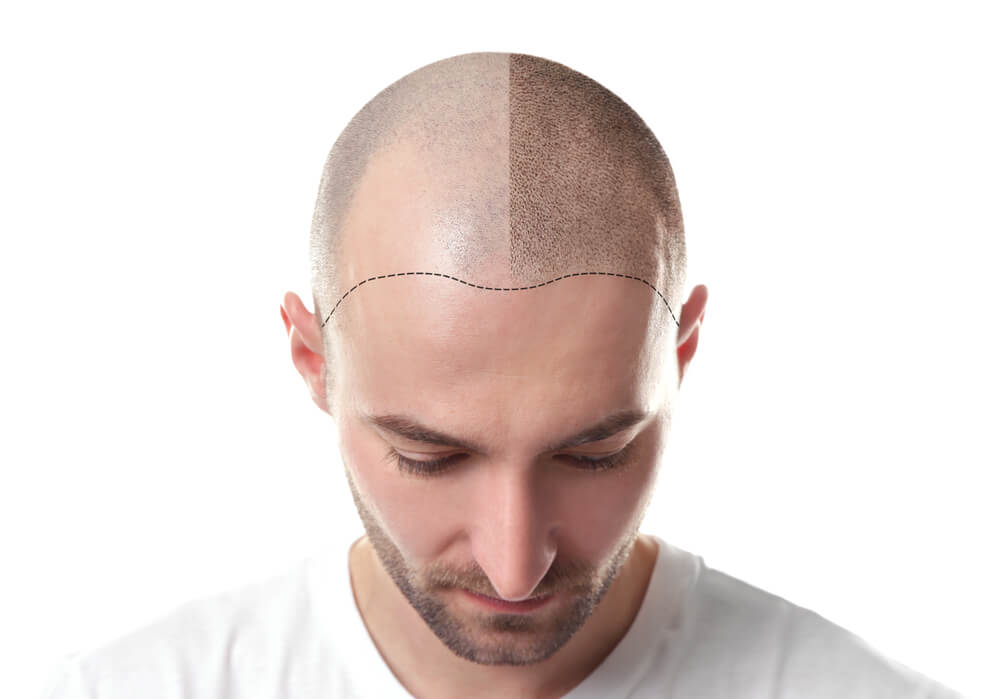
If you are wondering if a hair transplant is the best solution for your hair loss, then we’re assuming you know what a hair transplant is. However, if you don’t we will go over that too. Essentially, a hair transplant is a cosmetic procedure that involves harvesting hairs from a certain part of your scalp, and transplanting them onto a different part of your scalp. This donor area for the most part is usually the occipital (back of the head) area of your scalp since the hair here rarely recedes. For some, the term “hair transplant” can conjure up images of bad, plug-looking results that show full transparency of a procedure having been done. This is no longer the case with modern transplants as the technology in this field has greatly advanced since the 1980s hair plugs’ days. There are two main methods of hair transplantation involved in the majority of modern procedures: FUE and FUT. If you’d like to learn more about the differences between these two methods, feel free to read our article on that topic here. At Hair By Dr. Max, Restoration Center, we choose the FUE method as a means of transplantation. We also greatly promote our use of the ARTAS iX Robotic Hair Restoration System which has very much improved the efficiency and accuracy of modern-day surgeries. When deciding if a hair transplant is the right hair loss solution for you, it’s important to consider the following things: 1. Am I A Good Candidate For A Hair Transplant? Before even considering a hair transplant, it is important to consider if you are a good candidate for one first. It is suggested that no one under the age of 25 should receive a hair transplant, as they may be too young to have their hair loss pattern fully determined yet. Having a surgery this early on could also be counterproductive, accelerating the patients’ hair loss. Another criteria for a good candidate includes having a stabilized level of hair loss. The reason for this is because a hair transplant does not stop hair loss. Instead, it simply replaces the hair that has receded and or miniaturized. If your hair loss is stabilized already, you will not need to worry about the continued loss of hair after your transplant. 2. How To Take Care of Post-Transplant Hair Once the transplanted grafts on your scalp are healed, you can treat this new hair like the rest of your hair. However, it is important to know what are the DOs and DONTs for your post-surgery hair. Lucky for you, we wrote an article on just that which you can read here. One of the most important points we cover is: DO NOT touch/itch your scalp after your hair transplant. This is imperative, to say the least, as this can damage the newly transplanted grafts. This would cause further trauma to the grafts, thus rendering them unable to grow properly. After a couple of days after your hair transplant, it is normal to see scabs on your scalp. These scabs are likely to fall naturally anytime between a few days to over a week, so don’t be concerned when you see them. Like before, avoid picking at the scabs or scratching them when they itch. This can promote infection or damage to the site. 3. Learn About Hair Transplant Alternatives Ofcourse, it is probably a good idea to consider all the other hair loss solutions before simply jumping to a hair transplant. There are many potential solutions that may work well for you, but the effectiveness of each method is completely dependent on your specific case. Here at Hair By Dr. Max, Restoration Center, we offer a wide array of hair loss solutions, from Artas iX Robotic Hair Restoration, to Regenera Activa. There are also non-surgical methods that are offered, such as Capillus Laser Hair Therapy and DHT medications such as our Dr. Max Hair Boost topical solution. Feel free to read about all our hair restoration services here. If you have any questions regarding any of our services, don’t hesitate to give us a call at 954-945-2909. 4. A Hair Transplant Is Permanent If you are sure you’re a good candidate for a hair transplant and are certain that this is the method you wish to proceed with, be sure to understand such a procedure is permanent. Due to the nature of the procedure, one cannot reverse the results done. These newly transplanted hairs cannot be reversed as they become part of that new scalp area. This also puts much emphasis on making sure you choose the right hair surgeon to do your procedure. If you’d like to learn more about Dr. Max and the Hair By Dr. Max, Restoration Center team, you can read all about us here. To view our before-and-after results gallery, click here. If you have any other questions, please feel free to call us at 954-945-2909.
5 Things To Know If You’re Considering A Beard Transplant

Whether or not you were born with the ability to grow the perfect beard, you’re lucky enough to be born in a time where that can be permanently fixed. Similar to a hair transplant for one’s head, a beard transplant pretty much follows the same concept. If you are in the market to receive one, these are a couple things to know if you’re considering a beard transplant. What Method Is Used To Harvest The Donor Hair? As far as the methods one could choose from for scalp hair restoration, there are a few options (Artas Robotic System, FUE, FUT). However, when it comes to a beard transplant, the most generally accepted method is that known as FUE. FUE removes individual follicular units from the donor area; the graft count is planned for the individual patient. At Hair By Dr. Max, Dr. Max personally performs harvesting and implantation. With his sharp-implanter approach, the recipient opening and graft placement occur together, so separate pre-made recipient sites are generally not required. He plans the direction, angle, depth and distribution for the beard. This is still surgery involving small openings in the skin, not an incision-free or scar-free procedure. For this procedure, only local anesthesia is required. Where Does The Donor Hair Come From? Similar to a scalp hair transplant, the donor hairs usually come from the occipital (back of the head) area of the head. The reason this area of the scalp is usually considered a safe donor zone is because people rarely lose their hair here. Moreover, this hair is most similar to a beard in terms of thickness and texture. However, there are cases where Dr. Max has used the area under the patient’s chin as a donor area. These hairs were then transplanted to the patients beard area like normal. How Long Does A Beard Transplant Take? Though the length of this procedure can vary for each patient’s desired outcome, it will generally take about 7-8 hours. This is, for the most part, a couple hours less than a scalp hair transplant. Here at Hair By Dr. Max, Restoration Center, we hold our patients’ comfort and concerns at utmost importance. Usually after harvesting is complete, we take a lunch break for our patient and team before implantation then begins. What Is It Like After A Beard Transplant? After about two or three weeks after your surgery, your transplanted hairs will begin to fall out. But no need to fret! This happens because the body experiences mild shock from the transplant, but the hair’s papilla remains in its new home and will regrow after the hair regenerates. Your new beard follicles are just getting ready for a proper growth cycle. It will take around 90 days for your beard to complete its growth. At this point, most of the hair follicles will have settled into place. At around four months after surgery, your beard will begin to gain greater coverage. After about nine months, you will be able to grow a full beard. Am I A Good Candidate For A Beard Transplant? A beard transplant is a viable possibility as long as you have healthy hair on your scalp. This is necessary as it serves as the donor area for a beard transplant, thus determining it a viable possibility or not. Many men who have male pattern baldness are interested in the beard transplantation process but may have more limited options. As far as cost, keep in mind this depends on each client and what their specific hair restoration goal is. If you are struggling to grow facial hair whether because of genetics, injury, or scarring, feel free to give us a call at 954-945-2909. We’d be more than happy to create a custom plan to bring back your hair! You Might Also Like To Read 5 MORE HAIR TIPS YOU NEED TO KNOW Better to learn these tips than when it’s too late MAXIM’S SCALP GROWTH FACTORS FOR HAIR GROWTH Growth factors is used successfully to treat alopecia areata and other causes of non-hereditary hair loss. ARTAS IX ROBOTIC HAIR TRANSPLANT VS. FUT STRIP PROCEDURE In this article we will go over the biggest advantages the ARTAS iX Robotic Hair Restoration has over the traditional FUT method
5 More Hair Tips You Need To Know
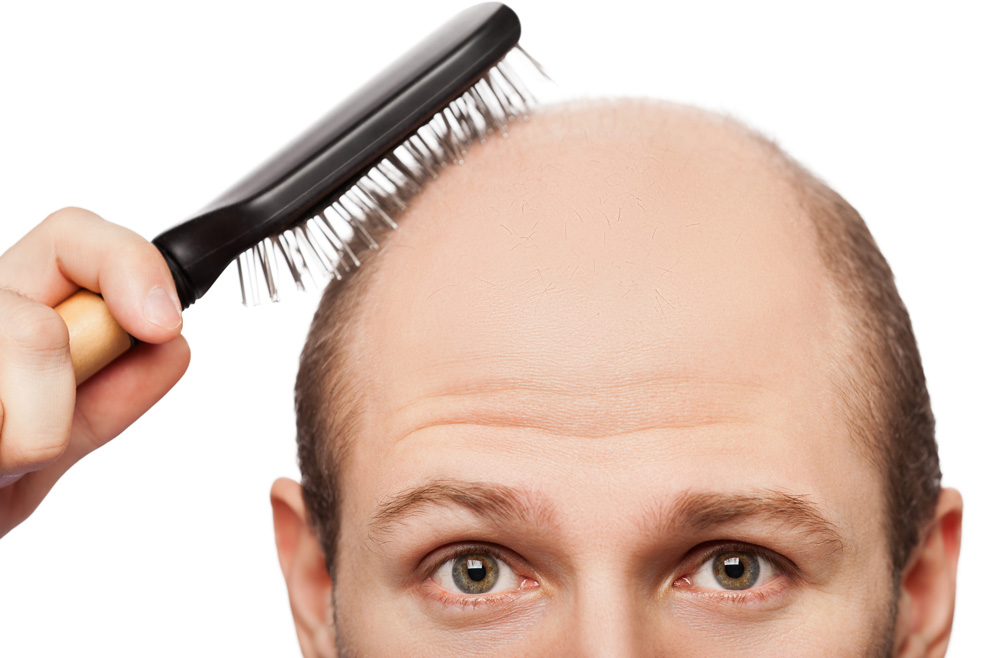
1. Give Thin Hair A Boost With Silicone Silicones are basically a group of ingredients that act as a raincoat for one’s hair or skin. Products with silicone will often lock out any humidity and leave one’s hair slick and smooth. While some conditioners can leave your hair feeling heavy and limp, products with silicone will give your hair a fuller appearance, hence why many swear by it. It is important to note that since most silicone products are not water-soluble, it can lead to some pretty annoying build-up over time. Thus, it’s probably best to find the “good” ones that are water-soluble. 2. Shower With Lukewarm Water To Protect Shine Though hot water is great for opening up pores thus allowing for a deep clean, it can also dry out your hair and cause it to become brittle. That doesn’t necessarily mean you have to freeze in the shower however. Instead, try to shower with lukewarm water that isn’t overbearingly hot. Washing your hair in hot water has its pros and cons. But, hot water doesn’t damage the internal protein structure of your hair. A simple rule to follow is to shower and shampoo with warm water, and then use cold water to wash your hair after conditioning. 3. Use The Right Product For Dandruff Dandruff is a skin condition that mainly affects the scalp. Symptoms include flaking and sometimes mild itchiness. It can result in social or self-esteem problems. A more severe form of the condition, which includes inflammation of the skin, is known as seborrhoeic dermatitis. While there are oil products out there that supposedly treat this skin disorder, medicated shampoos are the best way to tackle dandruff. Keep in mind, it can take about a few weeks for dandruff to disappear. So be sure to not switch shampoos too soon. It’s safe to say to try each one for at least a month to see if anything changes. 4. Brushing Can Promote Hair Loss Brushing not only can pull and tug hair follicles, but can promote hair loss due to the repeated motions and irritation to the scalp. The normal amount of hair loss is between 50-100 hairs a day. This number may seem like a lot, but in reality it is nothing compared to the average amount of hair we have. To mitigate some damage when using a brush, it’s suggested to use a brush with ball-tipped bristles. Moreover, brushing wet hair is highly advised against. This can lead to major breakage since more-than-necessary force is used to brush through knots. However, if you feel like every time you run your brush through your hair or are noticing a ton of hairs in your hands while shampooing, then this may serve as early signs of hair loss. Another place to look for shedding hair is on the pillow you sleep on. While we sleep, many tend to move a lot throughout the night. Thus, this causes friction between the pillow and scalp which can result in shedding. 5. Take A Break From Styling If you’re one to aggressively blowdry your hair in the mornings or use a ton of hair products to keep your style in shape no matter what gets thrown at you today, you can bet that great hair won’t come without a cost. Heat damage can make straight hair appear dry and brittle. It can also exaggerate the appearance of split ends and make it harder for your hair to lie flat. This isn’t to say that you should never continue to style your hair. It’s just a good idea to take extra steps to keep your hair healthy despite whatever heat tools and hair products you choose to use. Your hair will thank you. If you so choose to continue styling your hair using heat and products, there are ways to mitigate the damage you may do to your hair in the long-run. One simple way to safeguard your hair if you tend to use a blowdryer is to get yourself a good heat protectant. If the name isn’t dead giveaway to its purpose, essentially what it does is add a barrier between your styling tool and your hair, sealing in moisture and fending off frizz. They also work to smooth the cuticle, making your hair look smooth and feel soft. Instead of your hair being suddenly exposed to heat, it will gently heat up. This lowers the damage done to your hair and scalp. Keep in mind that heat protectants only reduce the amount of damage caused by heat styling. At most, they reduce the damage by 50% even with high end heat protectants.
What To Avoid After Hair Transplant – DOs and DON’Ts
So you’re planning on having a hair transplant pretty soon. Or maybe you’re just doing your homework on the subject. Either way, knowing how to take care of your newly implanted hair is just as important as choosing the right hair surgeon for your procedure. Given the rise of many methods and techniques hair experts employ these days, immediate post-op care can literally make or break the success of the procedure. This week, we will go over what to avoid after your hair transplant – the DOs and DON’Ts. 1. Don’t Touch Or Itch Your Scalp This rule is extremely important to adhere to, as are the other rules. After your procedure, it will be easier said than done to not touch or itch your scalp as it will obviously be quite a bit irritated and sore. Touching these newly placed grafts can very likely damage them. This can result in the graft falling or causing more trauma to your scalp which would hinder the graft’s healing process. After a couple of days after your hair transplant, it is normal to see scabs on your scalp. These scabs are likely to fall naturally anytime between a few days to over a week, so don’t be concerned when you see them. Like before, avoid picking at the scabs or scratching them when they itch. This can promote infection or damage to the site. 2. Don’t Do Anything That Would Make You Sweat Exercise can cause excessive sweating, but this rule also applies to things like going into a sauna or staying outdoors on an extremely hot day. In general, excessive sweating should be avoided completely, as this can lead to infection in your hair transplant site. If it is very hot in your area, stay inside as much as possible for the first month following your transplant. Talk to your doctor if your profession involves physical activity, especially if you sweat during it. You may need to take even more time off of work or have special provisions made for you as you recover from your hair transplant. 3. Don’t Wash Your Head Right After Surgery You shouldn’t wash your head at least for 24 hours after surgery. Once you are allowed to do it again, your touch should be light and careful, so as not to disturb the graft. You should also use cold water and light water pressure. This washing procedure should be kept up for a while after surgery, at least five days. Try not to let the water beat directly onto the recipient area where the grafts are for the first 4-5 days after surgery. You may want to have a cup in the shower to help rinse the graft sites. 4. Don’t Smoke Or Drink For At Least A Month After Surgery Aside from the negatives associated with these activities in general, if you just had your hair transplant surgery done, it is very important that you avoid any smoking or drinking for at least one month. The reason for this is because alcohol might thin your blood and cause bleeding. This in turn does not help you heal, and can even bring complications with it. It is best to avoid alcohol for at least three days after surgery. The same with nicotine, except smoking should be avoided for a whole month instead. Nicotine tends to interrupt and prevent blood flow to hair follicles, which are crucial for the growth of your new hair. 5. Do Stay Upright The 48 hours after your hair transplant surgery are crucial, so make sure to not bend over or lift anything even slightly heavy. This prevents excess swelling and bleeding and will help promote healing. In essence, try to keep (and sleep with) your head elevated above your torso to avoid this issue. You can begin to do yoga and other light exercises as early as a week after your hair transplant. However, you should be aware that standing on your head or a pose where your head is dangling is not good for your post-transplant scalp. Instead, you should sit out on those poses. Keep in mind, if you are unsure about anything, it is best to ask your doctor before doing anything. 6. Do Listen To All The Instructions Provided By Your Surgeon It is in the patient’s best interest to keep in mind all the instructions provided by their surgeon. There are many other rules involved in the care for your post-op hair transplant that aren’t covered here. Moreover, there may be specific rules or instructions provided by your doctor for your specific case. Your doctor may also prescribe you some medications for either pain or to promote healthy hair growth. For the sake of the success of the hair transplant, it is important to follow whatever steps these medications will entail. You Might Also Like To Read GUT HEALTH FOR HAIR GROWTH Learn how your gut health can impact hair growth… MAXIM’S SCALP GROWTH FACTORS FOR HAIR GROWTH Growth factors is used successfully to treat alopecia areata and other causes of non-hereditary hair loss. ARTAS IX ROBOTIC HAIR TRANSPLANT VS. FUT STRIP PROCEDURE In this article we will go over the biggest advantages the ARTAS iX Robotic Hair Restoration has over the traditional FUT method
Gut Health for Hair Growth
1. Provide Nutrients The follicle creates cells that make up hair using nutrients delivered by the bloodstream. Your gut microbiome actually synthesizes some of the key materials needed for hair growth. Perhaps the most important one is biotin, which your body uses to metabolize the amino acids needed to produce keratin, the cells that make up your hair. While it’s possible to get biotin in your diet and in supplements for hair growth, some strains of beneficial gut bacteria actually produce it, too. If your gut gets out of balance though, and other undesirable species take over, biotin production reduces, which can contribute to hair loss.Your gut bacteria also produce vitamin K2, which regulates calcium in your body, helping to make sure that it ends up where it needs to be (your bones and teeth), and not in places it shouldn’t, like the walls of your blood vessels. If the blood vessels in your scalp get too much calcium in their walls, this can compromise the blood flow to your follicles, making hair growth that much harder. 2. Regulate Hormones Beneficial bacteria help regulate the levels of various hormones in your body, including those related to hair growth, like testosterone, estrogen, and cortisol. If you have too much testosterone or too little estrogen, your hair can’t move through its growth cycle appropriately, potentially leading to hair loss; but a healthy gut microbiome can work to keep your levels of each hormone normal. Similarly, abnormally high levels of cortisol (the stress hormone) can disrupt the levels of hyaluronic acid and proteoglycans in your skin, impairing the function of your hair follicles. Visit us to test your levels! 3. Immune Function Some types of hair loss are related to an over-functioning immune system: much like how your immune system can overreact to non-harmful substances like pollen, it can also sometimes mistake its own cells as dangerous, attacking your hair follicles and making it difficult for them to function correctly. Not only does the microbiome help to regulate immune function so the immune system doesn’t overreact, but helpful bacteria can also increase anti-inflammatory cytokines, which are signaling proteins released by immune cells that tell tissues how to behave. L. reuteri in the gut, for instance, can increase the expression of a cytokine called IL-10 in the skin, which regulates sebum production and increases the numbers of hairs in the anagen phase. What’s more, a balanced gut microbiome lowers your stress levels to give your immune system a break, and even helps your body learn how to respond to all sorts of stimuli appropriately––after all, 80% of your immune cells are in your gut! 4. Avoid External Stressors Many common hair products are actually not good for your body. Artificial chemicals and synthetic materials can disrupt your skin microbiome, which is crucial for keeping your skin (hair follicles included) healthy and your gut microbiome balanced. Chemicals on your skin can affect your gut via the gut-skin axis, so be mindful of the things you’re using on your skin and hair, opt for natural products without harmful chemicals, and avoid overbathing in general. While you’re at it, make sure that you avoid putting structural stress on your hair: one other potential cause of hair loss and thinning is regularly wearing your hair in styles that pull on it, like a tight ponytail. Doing this over and over again can damage your follicles, causing patterns of hair loss around the edges of your scalp. 5. Replace Your Old Hair Products With Natural Alternatives Once you’ve cleaned out your harsh, synthetic cleansers, replace them with natural products that can give your skin and hair a little extra moisturization and protection. You’ve got so many options for promoting healthy, supple skin and shiny hair, including argan oil and castor oil, both of which are rich in vitamins and fatty acids that keep your skin healthy and your hair lush. 6. Eat foods that nourish your microbiome and promote healthy hair. Your body can’t grow healthy hair without the right building blocks, so make sure that you’re eating foods that support your gut microbiome and contain biotin, vitamin K2, and the amino acids used to produce healthy hair, like hyaluronic acid. Generally speaking, look for lots of vitamin-rich seasonal, organic produce; high quality meat, dairy, and eggs (great sources of biotin and vitamin K2); and fermented foods like natto, kimchi, and sauerkraut, which are rich in probiotics that can help produce essential vitamins. 7. Replenish Your Microbiome With Probiotics And Prebiotics. Of course, your body can only make the most of those nutrients for healthy hair if you have a good balance of beneficial bacteria in your gut, and given all the things that can disrupt your bacterial balance, that’s often very difficult to achieve without supplementation. So consider adding a premium probiotic to your daily routine. Bonus Tip: Don’t Forget About Your Mindset! One of the most amazing characteristics of the gut microbiome is its two-way connection to the brain via the gut-brain axis. Rebalancing your gut microbiome can lower your stress levels, but making a conscious effort to improve your mindset can also help your gut balance. Gratitude practices, meditation, and spending time with people who make you happy can all lower your stress levels, creating conditions that allow beneficial bacteria to thrive. And since your stress and microbiome are crucial for the health of your hair, it’s well worth paying some attention to your mindset as part of a holistic approach to your health and appearance. You Might Also Like To Read MAXIM’S SCALP GROWTH FACTORS FOR HAIR GROWTH Growth factors is used successfully to treat alopecia areata and other causes of non-hereditary hair loss. ARTAS IX ROBOTIC HAIR TRANSPLANT VS. FUT STRIP PROCEDURE In this article we will go over the biggest advantages the ARTAS iX Robotic Hair Restoration has over the
Artas iX Robotic Hair Transplant vs. FUT Strip Procedure
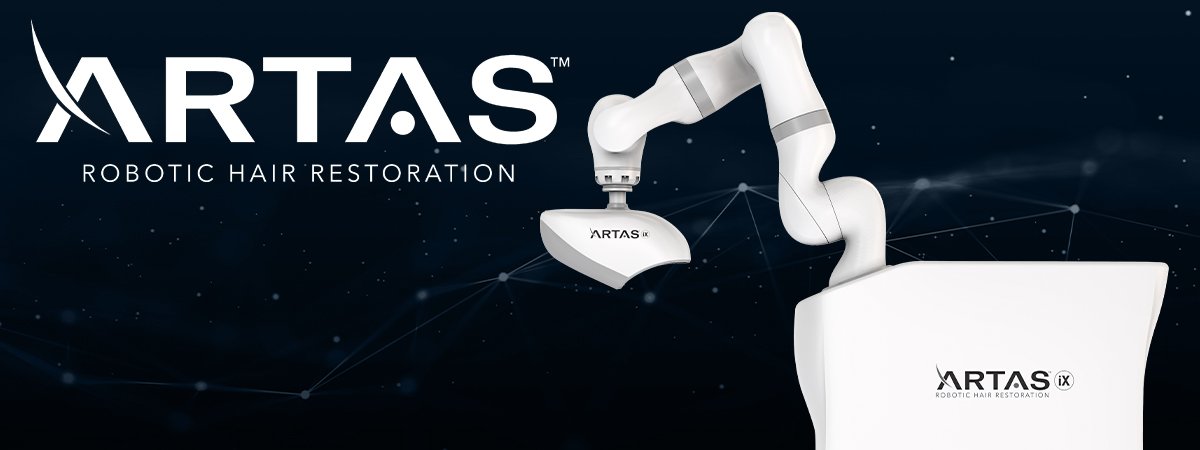
In the last half decade, there have been many improvements in hair restoration technology. Modern day advancements have made traditional methods, such as Strip Scar FUT hair restoration, completely obsolete. In this article we will go over the latest in hair restoration, Artas iX Robotic Hair Transplant, versus the traditional FUT Strip Procedure. Today we have methods like the ARTAS Robotic Hair Restoration System that far outshines the traditional Strip Scar FUT Method. However, in order to truly appreciate the progress of today, it’s important to understand where it started… Hair Transplant Origins Originating in Japan, the idea of the hair transplant was intended to restore hair for burn victims and those with scalp injuries. This type of hair loss is known as traumatic alopecia. It was not until the 1950s that this idea hit the western world in New York. A dermatologist by the name of Dr. Norman Orentreich began to experiment with the idea of relocating the hair on the back and sides of the head to the balding areas. He had shown that hair transplanted from the back of the head and side would still retain its growth ability regardless of where it was transplanted. This is known as Donor Dominance, and became a key factor in the progression of the practice. From the 1960s-1980s, we saw major improvements in hair restoration techniques. A focus on creating natural-looking results began to show, specifically in the frontal hairline area. It was not until 1995 that Follicular Unit Transplantation (FUT) had been created. This technique became the gold standard by the year 2000. Despite the technological improvements, FUT still had its list of drawbacks. Its signature con was the unsightly linear scar that would be left in the back of the scalp. This itself caused a whole other list of negative symptoms for the patient. Here at Hair By Dr. Max, we do offer FUT Scar Repair. If this interests you, please feel free to Contact Us at 954-945-2909 or schedule a Free Consultation here. To combat all the issues that were present with the FUT procedure, Follicular Unit Excision (FUE) was introduced to the medical literature in 2002. With the Manual FUE method, an instrument is used to make a small, circular incision in the skin around a follicular unit. This process separates the follicular unit from the surrounding tissue. The follicular unit is then extracted from the scalp, leaving a tiny hole which heals in a few days. This process is repeated until the desired number of follicles are obtained. This technique has since further progressed and is still heavily used today thanks to many advances in technology to further make the process more efficient. Feel free to ask us about our FUE services if this interests you! Modern Day Hair Restoration Methods Fast forward to 2011, and we see the introduction of a new age in modern hair transplants. The ARTAS Robotic Hair Restoration System, the most advanced technology in hair restoration, aids the surgeon in the extraction of grafts and the creation of recipient sites with precision and consistency that surpasses manual techniques. Here at Hair By Dr. Max, we take pride in adapting to the newest methods of hair restoration that best benefits our patients. In this article we will go over the biggest advantages of the ARTAS iX Robotic Hair Restoration System over the traditional FUT method. 1. Artas Hair Transplant Is Minimally Invasive As opposed to the traditional FUT procedure, which requires removing a long, linear strip of the patient’s scalp in order to harvest follicular units, the ARTAS iX Robotic Hair Restoration System is very minimally invasive. Due to the invasive nature of the Strip (FUT) method, this method often leaves patients with permanent scars, visible stitches, and a longer recovery period. The FUT method requires a high degree of precision and skill from the surgeon. With that being said, there is still the risk of human error. FUE donor harvesting removes individual follicular units through small circular openings rather than removing a strip of scalp. It avoids the linear donor scar associated with strip harvesting, but small donor scars can occur. Robotic assistance does not eliminate surgical risk. 2. Artas Hair Restoration Has Shorter Recovery Time Than FUT Method Due to the minimally-invasive nature of the ARTAS system, there is a shorter recovery time that the patient has to go through. In the FUE technique, there are no stitches involved, whereas in the FUT technique, the surgeon must stitch the donor area of the scalp back together. This is what results in the linear scar on the back of the head of patients who have had a FUT procedure. In turn, the patient must have proper recovery time, compared to a procedure with ARTAS where they would be able to go back to their usual activities after a day or two. 3. The Artas Method Is A Virtually Painless Procedure As one can imagine, when comparing a procedure that is more invasive than the other, it’s safe to assume that the more invasive one would also have more pain involved. You wouldn’t be wrong to assume that in this case either. Due to the fact that the FUT procedure leaves you with a linear scar, this can cause a number of other issues. These symptoms include lingering pain, tightness of the scalp, difficulty sleeping, weeks of restricted activity, potential nerve damage, tingling, and numbness just to name a few. The use of pain medicine is usually needed when it comes to the traditional hair restoration method. Contrary to the FUT method, the ARTAS method is on the opposite spectrum (again). Patients rarely require any use of pain medicine even right after this procedure. 4. The Artas Method Leaves No Sign Of A Hair Transplant Not that it has to be reiterated, but a key sign of
Regenera Activa – Not Just For Hair Growth!

WHAT IS A TREATMENT WITH MICROGRAFTING REGENERA ACTIVA? Regenera Activa rejuvenation by autologous stromal cells is a specially designed system that uses autologous cells transplantation. Cells, which are present in the patient’s own body. Treatment triggers regeneration and tissue renewal processes. Various fields of medicine use this procedure, such as aesthetic dermatology, trichology, plastic surgery, orthopaedics, oral and maxillofacial surgery, etc. The CE mark, PMDA Japan, and the US FDA certify the procedure. Treatment takes place only once; when the patient is the donor and recipient of these miraculous stem cells. At the same time, treatment can be repeated once every 2-3 years as part of maintenance therapy. WHICH AREAS CAN WE TREAT? Regenera Activa treatment is a mini-invasive technique suitable for any facial area or scalp area, as well as other body parts according to the physician’s recommendation. The Regenera Activa device prepares the cell solution and then, after dilution with saline, it is applied back to the skin through a mesotherapy technique (using a thin needle). It can be used to treat vitiligo, as well as hair growth, among many others. EFFECT OF REGENERA ACTIVA TREATMENT The first results of Regenera Activa treatment occur after a single treatment. A patient can observe the first visible changes within the 8-15 days. The recovery period is minimal; the main results appear and increase for the following 3-6 months after treatment. The treatment reduces and eliminates wrinkles, fine lines, spotting, and scarring. It promotes healthier skin, protects against aging, and essentially gives your face a face lift, all without surgery. Regenera Activa is a safe and effective technique for fighting alopecia and rejuvenating the skin. It is an entirely natural technique without any additives or chemical activators. In the case of this treatment, the material used is exclusively obtained within the patient’s body. Moreover, this treatment improves the condition and quality of the skin, nourishes hair follicles, results in increased hair density and stimulates the growth of new hair follicles. HOW IS THE REGENERA ACTIVA TREATMENT PERFORMED? Regenera Activa is a mini-invasive procedure, taking small pieces of tissue (approximately 3 mm) from the hair region of the nape (this area is least prone to androgenic alopecia). A doctor collects graft tissue in local anaesthesia. Therefore, it is completely painless and its small size ensures rapid healing. The patented system treats the tissue samples taken and produces a beneficial stem-cell-rich solution with growth factors. A physician immediately applies this solution to the patient in the treated area. The simplicity and effectiveness of the procedure does not limit the patient from his everyday activities. You Might Also Like To Read WHAT GOES INTO DR. MAX’S HAIR BOOST SOLUTION? This isn’t your grandparents’ hair growth solution.. FOUR PHASES OF HAIR GROWTH We lose about 100 hairs per day…Learn Why WHAT MAKES AFRICAN AMERICAN HAIR TRANSPLANTS UNIQUE? Due to recent advancements in technology, the FUE approach has become a very viable option…
What Goes Into Dr. Max’s Hair Boost Solution?
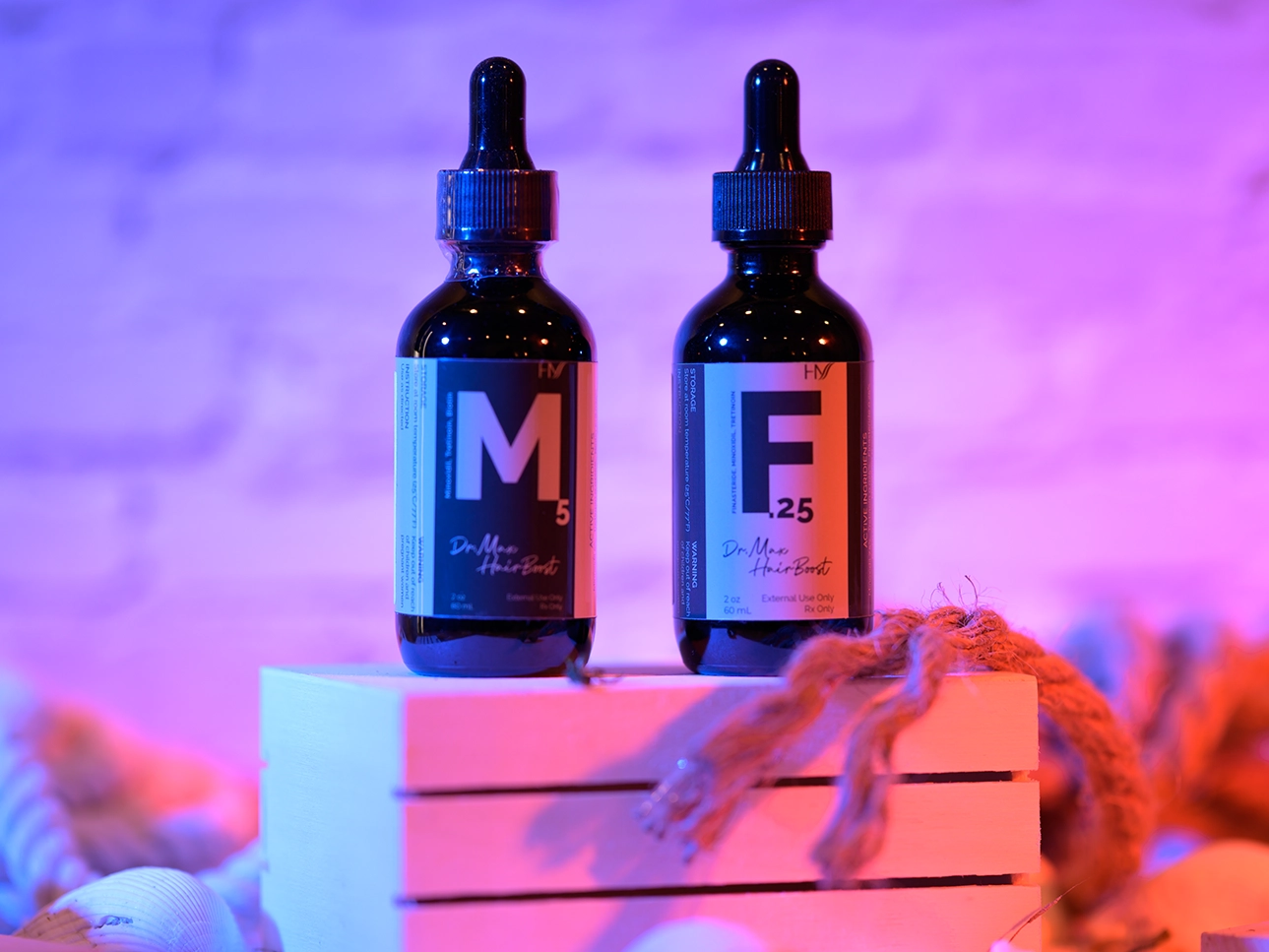
At Hair By Dr. Max, Restoration Center, we are attentive to all your hair restoration needs and are happy to offer other solutions to help you achieve thicker, fuller hair. Hair By Dr. Max, Restoration Center offers Hair Boost, which are topical solutions formulated with DHT blockers and other ingredients . Our Hair Boosts have been clinically proven to boost your hair follicles and increase hair density. Because the solutions are applied topically to the skin, there are also less systemic side effects. Our Hair Boosts come in solutions for use by both men and women; both formulas are prescription-only and do require a formal consultation with Dr. Max. Come in today and learn more about which non surgical hair loss treatment might be best for you. In the following article, we will go over the ingredients in our hair boost topical solution for men and women who suffer from hair loss. Keep in mind, it is always best to consult your doctor or a hair specialist before taking any medications. If you have any questions, please feel free to call us at 954-945-2909. 1. Finasteride Finasteride was originally used to treat men with benign prostatic hyperplasia (BPH), but a side factor of the medication included combating male pattern hair loss, also called androgenetic alopecia. It may be used alone or in combination with other medicines such as an alpha-blocker to treat BPH. For men with hair loss, finasteride will increase the number of scalp hairs but will not increase the amount of body hair. 2. Minoxidil Originally created to treat high blood pressure, soon after that it was discovered that Minoxidil had properties that promote hair growth in patients. It is effective in helping promote hair growth in people with androgenic alopecia regardless of sex. About 40% of men experience hair regrowth after 3–6 months. Minoxidil must be used indefinitely for continued support of existing hair follicles and the maintenance of any experienced hair regrowth. The mechanism by which minoxidil promotes hair growth is not fully understood. Minoxidil is a potassium channel opener, causing hyperpolarization of cell membranes. Theoretically, by widening blood vessels and opening potassium channels, it allows more oxygen, blood, and nutrients to the follicles. This may cause follicles in the telogen phase to shed, which are then replaced by thicker hairs in a new anagen phase. 3. Tretinoin Tretinoin is a Vitamin A analog and a topical form of retinoic acid. It is sometimes prescribed as a subsidiary treatment to enhance the efficacy of Minoxidil, such as in Rogaine. Some of the retinoids produced much greater changes in the levels of cellular retinoic acid-binding protein. And these compounds also demonstrated a much stronger influence on the hair life cycle. Similar events occur when using Minoxidil. This seems to support the ability of retinoids to have some ability to support new hair growth. Experts believe that certain retinoids are able to regulate and promote the proliferation of cells as well as processes which cause them to differentiate. It may also cause blood vessels to proliferate as well. These dynamics are important for the promotion of hair growth. 4. Melatonin It’s the only treatment FDA-approved for female pattern baldness, or androgenetic alopecia. The telltale sign of androgenetic alopecia is an overall thinning of your hair. For many women, hair loss happens on the top or the front of the head. In most women, minoxidil slows down or stops hair loss. And in up to a quarter of the women who take it, minoxidil can actually encourage new hair to grow. It works best when you use it as soon as you notice that you’re losing hair. Minoxidil is thought to induce an early anagen phase when it’s applied to your scalp, meaning it can cause hair follicles to go through the rest of the growth process prematurely before starting to grow again. This is why some people experience hair shedding when they first start using minoxidil. As hair follicles go through the growth process and enter into the anagen phase, old hairs can fall out in large numbers, making it seem as if you’re losing more hair than normal. Minoxidil also prolongs the anagen phase, leading to increased hair length and diameter. 5. DMSO DMSO is a prescription medicine and dietary supplement. It can be taken by mouth, applied to the skin (used topically), or injected into the veins (used intravenously or by IV). DMSO is taken by mouth, used topically, or given intravenously for the management of amyloidosis and related symptoms. Another commonly associated substance with DMSO is MSM (methylsulfonylmethane). DMSO is used topically (applied to the skin). MSM is sold as a dietary supplement, either alone or in combination with other ingredients such as glucosamine. It has shown to aid in the promotion of hair growth in patients who have used it. You Might Also Like To Read FOUR PHASES OF HAIR GROWTH We lose about 100 hairs per day…Learn Why WHAT MAKES AFRICAN AMERICAN HAIR TRANSPLANTS UNIQUE? Due to recent advancements in technology, the FUE approach has become a very viable option… 5 WAYS STRESS CAUSES HAIR LOSS It’s best to learn these signs sooner than later!