
Direct Graft Implantation describes how grafts are placed in the recipient area after FUE donor harvesting. FUE is the harvesting method; direct implantation is the placement method.
Maxim Chumak, MD, ABFM, ABHRS Diplomate, FISHRS, personally implants every graft using sharp implanters. The recipient opening and graft placement are performed in a single step, so separate pre-made recipient sites are generally not required.
“No separately pre-made recipient sites” does not mean “no incisions” or “no slits.” The sharp implanter creates a small opening as each graft is placed. Hair transplantation remains surgery, with risks and a recovery period.
At Hair By Dr. Max in Fort Lauderdale, surgery is limited to one patient per day. The restoration plan considers natural hairline design, preservation of the finite donor supply and future hair loss.
Key features of direct graft implantation:
- Dr. Max personally performs harvesting and implantation.
- Recipient-site creation and graft placement occur together with a sharp implanter.
- Dr. Max controls graft direction, angle, depth and distribution according to the individual treatment plan.
- Trained assistants may support non-surgical graft preparation; they do not perform harvesting or implantation.
- Donor supply, hair characteristics and the restoration plan affect achievable coverage. No technique guarantees graft survival or a particular result.
Learn more about FUE hair transplantation, ARTAS iX robotic hair restoration and our patient results. Dr. Max will explain which approach is appropriate for your situation.
How Does It Work?
01
Re-Positioning
02
Loading Implanters
Trained assistants may support non-surgical graft preparation, including graft organization, microscopic inspection and sorting, and loading harvested grafts into implanters under Dr. Max’s direction. These support duties are separate from surgery: Dr. Max personally performs harvesting and implantation.

03
Implantation
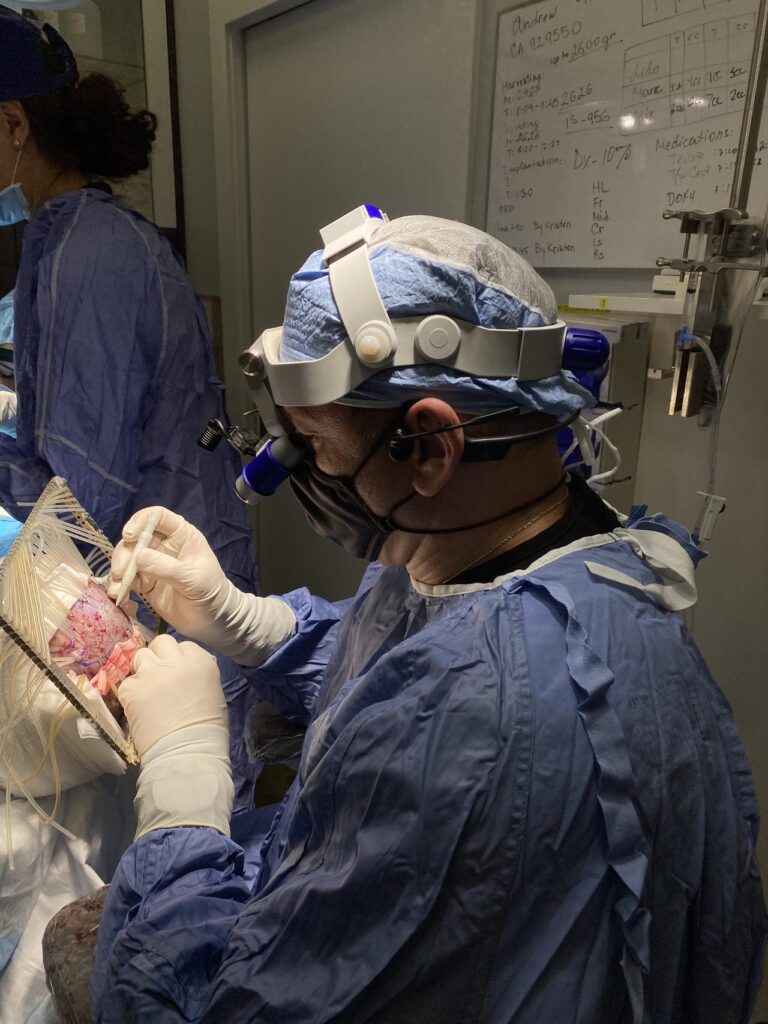
After local anesthesia has taken effect, Dr. Max personally implants each graft using a sharp implanter and medical magnification. The recipient opening and graft placement occur together in a single step, so separate pre-made recipient sites are generally not required.
Dr. Max controls the direction, angle, depth and distribution of the grafts according to the individual restoration plan. The pace of implantation depends on the patient and procedure; graft care and precise placement take priority.

04
Quality Control
Surgeon performs a quality control examination after Direct Graft Implantation. This mitigates the risk of faulty grafts and potential infections.

WHY CHOOSE DIRECT GRAFT IMPLANTATION?
- One-step recipient placement: Dr. Max uses sharp implanters to create the recipient opening and place the graft together, so separate pre-made recipient sites are generally not required. Small openings are still made in the skin. Direct implantation is not incision-free or scar-free.
- Physician-controlled placement: Dr. Max personally controls the angle, depth, direction and distribution of each graft. The implanter is a surgical instrument, not a substitute for the surgeon’s judgment. Hairline design, donor supply and individual healing influence the outcome; results are not guaranteed.
- Donor harvesting and scars: FUE removes individual follicular units instead of a strip of scalp, avoiding the linear donor scar associated with strip harvesting. Small donor scars can still occur. Direct implantation describes recipient placement and does not eliminate donor or recipient healing.
- Individual planning and recovery: Direct implantation may be used in suitable No-Shave or Long-Hair FUE plans, including selected female patients. Donor harvesting, donor trimming and recipient-area shaving are separate decisions. The technique does not guarantee more growth, faster healing or an invisible recovery. Follow Dr. Max’s individualized aftercare instructions, including when to wash your hair and resume activities.
DIRECT GRAFT IMPLANTATION PATIENTS RESULTS


NEXT STEP
Schedule a consultation with Dr. Maxim Chumak to review your hair-loss pattern, donor capacity, treatment goals and long-term restoration options. His hair-restoration team can help arrange the appointment and explain the current consultation format and fees.